
.png)
What Do Fairies Look Like in Real Folklore?

When most people picture a fairy today, they imagine something small, beautiful, winged, and glowing.
That image is much newer than many people realize.
In older European folklore, fairies were not one clearly defined species. They could appear human-sized, tiny, radiant, pale, old, beautiful, frightening, richly dressed, ragged, or almost invisible. Some looked so human that the danger was not recognizing them at all.
That is what makes old fairy folklore so interesting.
The deeper you go into early accounts, ballads, trial records, and folklore collections, the less fairies resemble the harmless winged creatures of modern children’s stories.
Here is what people in the past actually said they looked like.
1. Many Fairies Were Human-Sized
One of the biggest misconceptions is that fairies were always tiny.
They were not.
In many British and Scottish traditions, fairies could appear close to ordinary human size. They rode horses, held courts, married, fought, danced, kidnapped people, and lived in communities that mirrored human society.
Robert Kirk, a Scottish minister writing in the late seventeenth century, described fairies as having children, nurses, marriages, deaths, and burials “in appearance” much like humans.
That is a very different image from a six-inch creature sitting on a flower.
In many older stories, the fairy’s danger came partly from how normal it could look.
A traveler might meet a beautiful stranger on a road and only later realize that something was wrong.
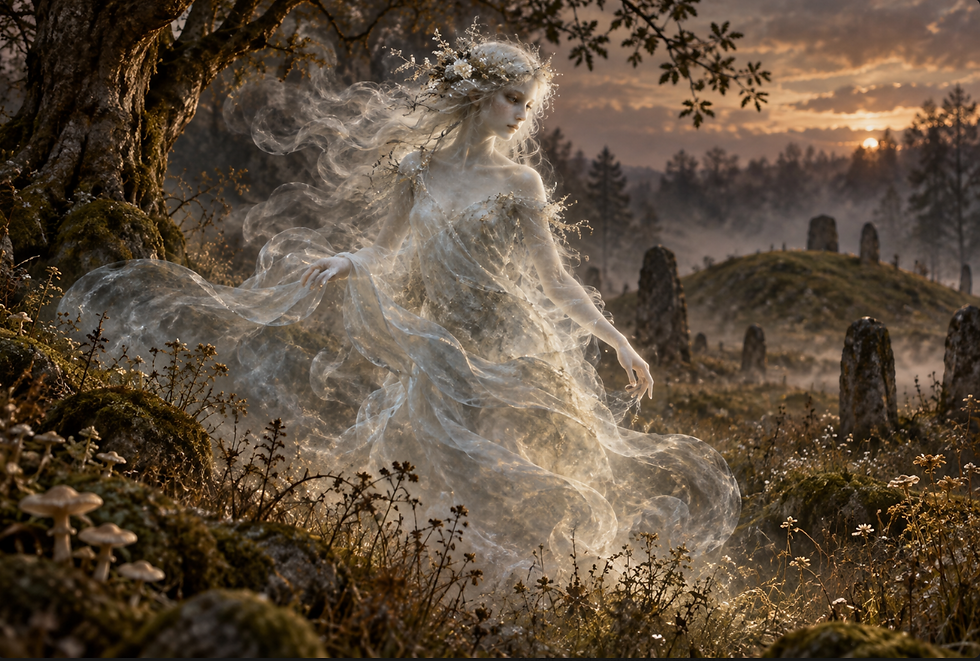
2. Their Bodies Were Sometimes Described as Almost Like Clouds
One of the strangest descriptions comes from Robert Kirk’s The Secret Commonwealth, written around 1691.
Kirk described fairies as having what he called “light changeable bodies,” comparing them to something like a condensed cloud.
That idea is fascinating because it suggests that fairies were not always imagined as fully physical in the ordinary sense.
They could appear solid enough to interact with people, but their bodies were thought to belong to a different kind of existence.
Kirk also said some had bodies so thin or refined that they could survive on the essence of food and drink rather than consuming it in the way humans do.
In other words, some people imagined fairies as beings that looked physical while not being entirely physical.
That helps explain why old stories so often describe them appearing, disappearing, passing between worlds, or becoming difficult to see.
3. Twilight Was Supposed to Make Them Easier to See
Kirk also wrote that fairies were best seen in twilight.
That detail fits beautifully with the larger folklore tradition.
Fairies frequently appear at boundaries.
Sunset.
Dawn.
The edge of a forest.
The entrance to a hill.
A riverbank.
A crossroads.
These are all places or moments that are neither completely one thing nor another.
Twilight is not quite day and not quite night.
A fairy hill is not completely part of the human world and not completely outside it.
That may be one reason fairy folklore feels so strange. These creatures often belong to the spaces between familiar categories.
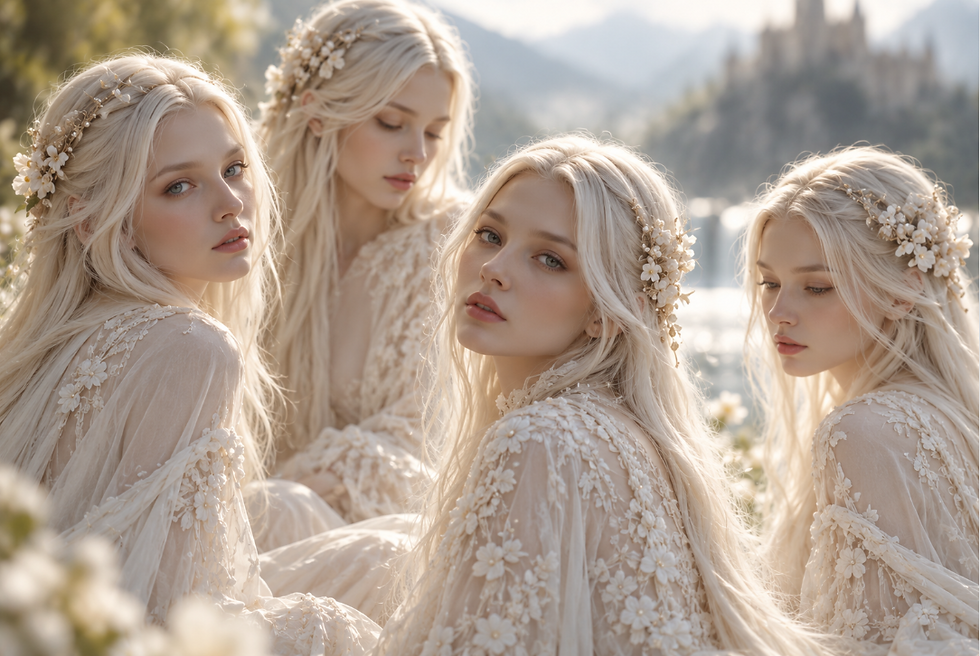
4. Some Fairies Were Beautiful Women Dressed in White
Not every old fairy was grotesque or frightening.
Some were explicitly described as beautiful.
A remarkable example appears in Reginald Scot’s The Discoverie of Witchcraft from 1584.
Scot reproduced magical instructions that claimed three fairy sisters named Milia, Achilia, and Sibylia could be summoned.
The text instructed that they should appear in the shape of beautiful women dressed in white.
The important thing here is the date.
This was written centuries before the modern image of tiny winged fairies became dominant.
The fairy being imagined here looked more like a mysterious supernatural woman than a miniature creature.
White clothing appears repeatedly in supernatural folklore and can suggest beauty, otherworldliness, purity, death, or simply something visually unnatural against a dark landscape.
5. Fairies Were Not Necessarily Winged
This surprises a lot of people.
Older British and Celtic fairy traditions generally did not require fairies to have wings.
They walked.
They rode horses.
They danced.
They entered houses.
They traveled in groups.
They disappeared through supernatural means, but wings were not necessary.
The delicate insect-winged fairy became especially popular through later art, literature, theater, and Victorian illustration.
That does not mean winged fairies have no connection to tradition.
It means that wings were never the universal identifying feature people often assume they were.
If you met a fairy in an old Scottish story, there might be nothing immediately obvious about its body that told you what it was.

6. Green Clothing Was Strongly Connected With Fairyland
Green became one of the colors most strongly associated with fairies in British folklore.
This makes sense given their connection to hills, forests, fields, and wild places.
But green was not simply decorative.
In folklore, clothing could identify that someone belonged to another world.
Old stories and later folklore collections repeatedly associate fairy people with green garments.
There are also traditions in which supernatural beings react strongly to receiving clothing from humans.
A Brownie, for example, might perform household work until someone attempted to reward it with clothes, after which it vanished.
Clothing was not always a minor detail in folklore.
It could represent status, identity, obligation, or a change in relationship between the human and supernatural worlds.
7. Some Fairies Looked Like Old Men
Not every fairy was youthful and beautiful.
Older European folklore contains many small supernatural beings described as aged men with long beards.
Thomas Keightley’s nineteenth-century Fairy Mythology collected traditions of beings such as German “little wights” who were described as short old men with long beards and clothing connected to mining.
This is important because the old category of “fairy” was much broader than the modern one.
Dwarfs, elves, household spirits, underground beings, mine spirits, and nature spirits sometimes overlapped depending on location and storyteller.
There was never one universal fairy anatomy.
A fairy might look like a beautiful maiden in one region and a wrinkled underground worker in another.

8. They Could Look More Beautiful Than Humans
Fairy beauty in old stories is often dangerous.
A supernatural woman might be extraordinarily beautiful, richly dressed, and almost impossible to resist.
That beauty was not necessarily proof that she was good.
In ballads and legends, beautiful fairy women sometimes lure people away from the human world.
The beauty itself becomes part of the danger.
This is very different from modern fantasy, where physical beauty often signals elegance or goodness.
Older folklore was much more suspicious.
Something could be beautiful precisely because it was not human.
9. Fairies Could Appear as Children
Old folklore contains unsettling stories in which supernatural beings resemble children.
This connects to changeling traditions.
A fairy might supposedly leave one of its own in place of a human child.
Descriptions varied widely. Some changelings were said to look sickly, unnaturally old, strange, or physically different. Others might initially appear close enough to the original child to deceive a family.
These stories are disturbing today, especially because real illness or disability was sometimes interpreted through superstition.
But from a folklore perspective, they reveal an important idea:
Fairies were feared because they could imitate human beings.
The frightening question was not always:
“What does a fairy look like?”
Sometimes it was:
“How would you know if you were looking at one?”

10. Other Fairies Were Ugly, Hairy, or Misshapen
At the opposite extreme were household spirits, goblin-like beings, hobgoblins, and other fairy-adjacent creatures described as rough, hairy, ugly, or strangely proportioned.
Brownies, for example, were often imagined as small household spirits rather than glamorous fairy nobles.
Folklore rarely insists that supernatural beings conform to one appearance.
The same broad supernatural world could contain elegant fairy queens and filthy household spirits.
This diversity is one reason the word “fairy” can be misleading when reading older material.
People in previous centuries often had many local names for beings that modern readers might group together.
11. Their Appearance Could Change
Perhaps the strangest feature of old fairy lore is that appearance was not always stable.
Fairies belonged to a supernatural category in which transformation was possible.
A being might appear as a person, animal, light, shadow, or something difficult to describe.
Kirk’s description of “changeable bodies” fits this idea particularly well.
Fairy stories repeatedly blur the line between seeing something and being allowed to see it.
Certain people supposedly possessed “second sight,” meaning they could perceive supernatural beings invisible to everyone else.
Others might see them only at certain times or places.
That means asking what fairies looked like may have been the wrong question to someone living centuries ago.
Their answer might have been:
It depends on what they want you to see.

12. Their World Could Look Richer and Brighter Than Ours
Fairy appearance was not limited to bodies.
Old accounts also describe Fairyland itself as visually unusual.
Kirk recorded a story in which a woman gained the ability to see what fairies were doing after using a mysterious ointment.
She then discovered a place filled with light even though there was no visible lamp or other source producing it.
That is a remarkable image.
Fairyland was often imagined as more vivid than the ordinary world.
There might be magnificent halls inside hills.
Music coming from underground.
Beautiful clothes.
Feasts.
Jewels.
Unnatural brightness.
Time itself might behave differently there.
The supernatural quality was not always attached directly to the fairy’s face or body.
Sometimes everything around them seemed wrong.
13. Fairies Were Often Associated With Processions and Crowds
Modern fairy art frequently shows a solitary fairy.
Older folklore often imagines entire societies.
Fairies traveled in companies.
They danced in rings.
They rode together.
They held courts.
They fought battles.
They celebrated weddings and funerals.
Kirk even described them as being divided into tribes and orders.
That makes the traditional fairy world feel less like a collection of magical insects and more like a hidden civilization existing alongside humanity.
A person encountering fairies might not see one tiny creature.
They might see an entire procession moving across a hillside.
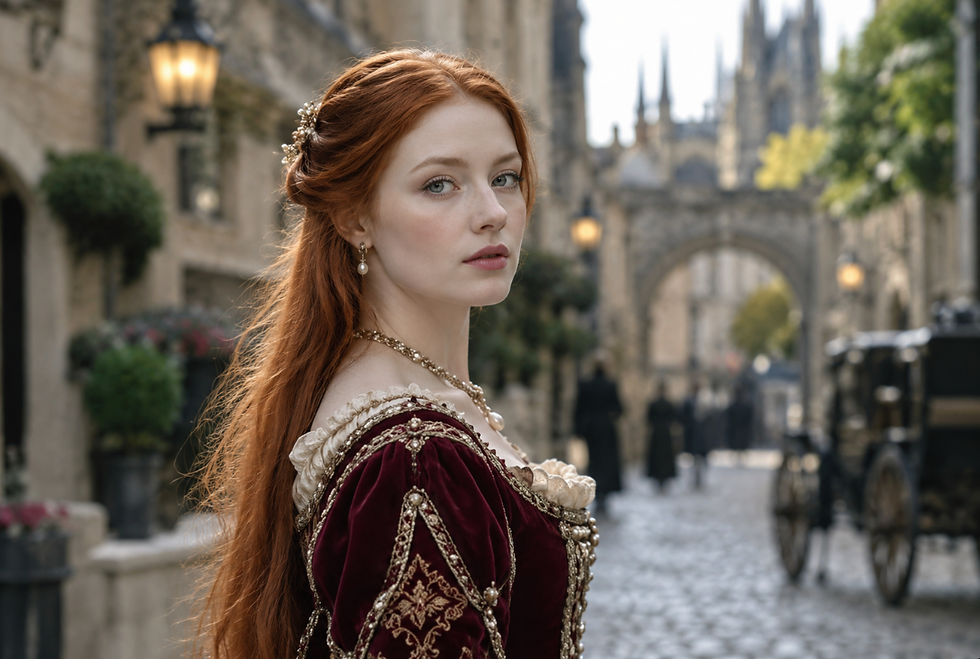
14. Fairy Queens Could Look Like Noblewomen
The idea of a fairy queen is very old.
In British tradition, supernatural queens and ladies often appear with the dignity of royalty rather than the appearance of tiny woodland spirits.
They ride.
They command attendants.
They offer gifts.
They issue warnings.
They sometimes take humans into Fairyland.
The Scottish ballad tradition surrounding figures such as Thomas the Rhymer helped preserve this image of Fairyland as something aristocratic and dangerous.
The fairy queen could resemble a magnificent human noblewoman.
But that resemblance did not make her human.
15. Sometimes the Most Frightening Fairy Looked Completely Normal
This may be the detail modern fantasy misses most often.
The strangest fairy is not necessarily the one with glowing eyes, enormous wings, or pointed ears.
It may be the stranger who looks almost ordinary.
Older folklore constantly plays with uncertainty.
Was that person really human?
Why did the music stop when someone approached?
Why was someone standing beside the fairy hill after sunset?
Why did a person disappear for what felt like one evening and return years later?
The supernatural becomes frightening precisely because it can hide inside the familiar.
That is a much older type of fairy than the sparkling creature at the bottom of the garden.
So What Did Fairies Really Look Like?
There is no single answer.
That is the answer.
Fairies were never one biological species with an agreed-upon height, wing shape, or clothing style.
They were a huge collection of supernatural traditions that changed across centuries and regions.
Some were human-sized.
Some were tiny.
Some were beautiful.
Some were grotesque.
Some resembled old men.
Some appeared as mysterious women.
Some dressed in green.
Others appeared in white.
Many had no wings at all.
Some supposedly had bodies almost like condensed air or clouds.
Others looked human enough to walk through the world unnoticed.
And perhaps that is why old fairy folklore is so much more interesting than the simplified version most people know today.
The people telling these stories were not always imagining something cute hiding among flowers.
Sometimes they imagined another civilization living under the hills.
One that watched us.
Borrowed from us.
Danced near us.
Sometimes stole from us.
And occasionally looked so much like us that we might never know the difference.


Comments